
Focused schema therapy inspired interventions for mood and anxiety: A hands-on clinical training
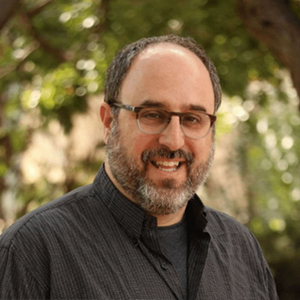
Presenters names: Eshkol Rafaeli, PhD
Date: November 19–20, 2026 (9:00 AM – 3:30 PM daily)
Venue: VIKOTE Cognitive and Schema Therapy Center 1083 Budapest, Baross utca 119/a.
Fee: 140.000,- Ft
Abstract: In a period of global crisis and unrest, the gap between the need for mental health treatments and their availability is wide and widening, leading to various efforts to create focused, tailored, and personalized solutions to help bridge this gap. But what should such personalization be based on? In recent decades, most research on treatment personalization has emphasized diagnostic categories and protocol-driven, diagnosis-specific care. In recent years, however, the limitations of this approach are increasingly recognized, along with the high prevalence of comorbidities, the utility of transdiagnostic work, and the use of unified protocols that are actually less personalized.
Another approach that has gained momentum in recent years suggests that an effective way to improve treatment overall, and enable personalized care specifically, involves process-based therapy. In this approach, championed by Steven Hayes and Stefan Hofmann, leading figures in the second and third wave of CBT, the focus shifts from symptom-reduction to identifying and addressing the underlying processes whose disruption causes symptoms.
While Hofmann and Hayes focus primarily on cognitive/behavioral processes of emotional regulation, process-based work can be expanded further to identify and address the array of processes underlying diverse emotional needs. To do so requires two things: (a) a clear lexicon of psychological needs, and (b) ideas for working with each of them. This is where schema therapy comes in, both as a theory centered on psychological needs, and as an integrative treatment approach which guides clinicians in the pragmatic use of diverse emotion-focused, cognitive, behavioral, and relational tools.
The gaping need for schema therapeutic thinking across a broad spectrum of care will be the focus of this workshop. I will briefly review the rationale for process-based approaches in general, and then delve into a set of ideas and tools for process-based work which brings schema therapy ideas into the realm of focused (and often brief and modular) interventions for mood, anxiety, and related disorders. I will provide an overview of this model, currently being researched jointly at Bar-Ilan University and UC Berkeley, and will devote the majority of the time to learning and practicing the therapeutic tools it provides. Utilizing brief video demonstrations and in-vivo exercises to familiarize participants with the protocol, we will lean on clinical insight on the use of imagery focused on current-life and on the future (as presented in Maurer & Rafaeli, 2020, in Heath & Startup’s Creative Methods in Schema Therapy: Advances and Innovation in Clinical Practice; Routledge) and on exciting psychophysiological insights on the mechanisms of imagery work (Bar-Kalifa, Prinz, Atzil-Slonim, Rubel, Lutz, & Rafaeli, 2019).
Learning outcomes:
- Theoretical understanding of schema therapy’s needs model as process-based thinking
- Practical competence in the application of a brief, schema-therapy inspired treatment protocol, applicable to anxiety and related disorders.
- Development of insight into the use of imagery focused on current-life and on the future.
Presenter bio:
Eshkol Rafaeli, PhD, is a co-founder of the Israeli Institute for Schema Therapy, and a professor of clinical psychology at Bar-Ilan University, Israel, where he directs the Affect and Relationships Lab. Prior to joining BIU, the lab and Eshkol were at Barnard College, Columbia University. With fuding from NIMH, ISF, BSF, the Templeton Foundation, and others, Eshkol and his lab have conducted basic research on personality, affect, and relational processes in individuals and dyads. In recent years, Eshkol has increasingly turned to the study of psychotherapy processes; at present, these involve a treatment personalization study of single session interventions (in collaboration with colleagues at UC-Berkeley) and a study examining changes in self-structure surrounding brief imagery-based CBT for anxiety (in collaboration with colleagues at Trier University). Eshkol is the co-author (together with David Bernstein and Jeffrey Young) of the 2010 Routledge book on Distinctive Features of Schema Therapy.
For further information, please contact our colleague, Attila Kozák, at sematerapia@vikote.hu or by phone at +36 70 420 9485 on working days between 9:00 and 17:00.
Dátum
Időpont
Helyszín